

featured
Will Trump to Enact the Insurrection Act for ICE Total Control? // Phillip DeFranco


Phillip DeFranco | Trusted Newsmaker
The Insurrection Act Threat Is No Longer Abstract — It’s Unfolding in Real Time
What is happening in Minneapolis is not a protest response, a law enforcement surge, or a routine federal intervention. It is the closest the United States has come in decades to a direct confrontation between federal forces and local government — with the president openly threatening to invoke the Insurrection Act and deploy the military against an American city that does not want federal agents present.
The situation has escalated beyond political rhetoric. Armed, masked ICE agents are conducting aggressive operations across Minneapolis neighborhoods, while state and city leaders describe the federal presence as an invasion. At the center of the crisis is a legal and constitutional standoff that could redefine the balance of power between the federal government, states, and the public.
“Organized Brutality,” According to State Leaders
Minnesota Governor Tim Walz delivered an extraordinary address describing federal agents going door to door, pulling over residents indiscriminately, demanding identification, breaking windows, and detaining people in unmarked vehicles. Pregnant women, Walz said, were dragged through streets. Masked agents with no visible identification flooded residential areas.
Minneapolis Mayor Jacob Frey echoed the alarm, calling the operation an invasion and warning that the city was being pushed toward open conflict between federal agents and local communities. “This is not creating safety,” Frey said, as residents pleaded with local police to stand with them against ICE.
By nightfall, flashbangs and tear gas filled the streets. Protesters responded with fireworks and debris. Minneapolis resembled a war zone — not because of a riot, but because two levels of government were operating in direct opposition.
Federal Shootings Fuel the Crisis
Tensions intensified after ICE agents shot multiple people during enforcement actions, including the killing of Rene Good. Federal authorities claimed self-defense, asserting that an agent was attacked and suffered internal bleeding. Local police initially backed parts of the account.
But scrutiny followed quickly. Medical experts questioned the plausibility of the federal narrative, noting that patients with genuine internal organ bleeding are typically hospitalized for 24 to 48 hours. The agent involved was reportedly released the same day. The family of Rene Good has since retained the same legal team that represented George Floyd’s family, launching an independent civil investigation.
For many residents, the shootings confirmed their worst fears: that federal agents were escalating violence while operating beyond local oversight.
Trump’s Insurrection Act Threat
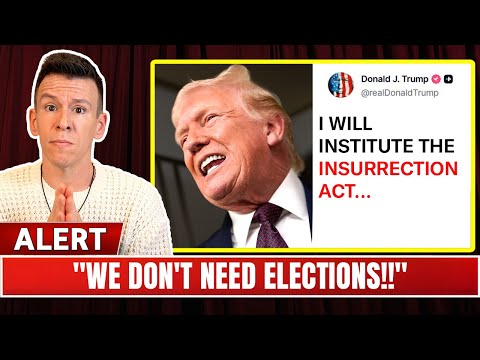
As Minneapolis burned with tension, President Donald Trump escalated the situation nationally. In a public post, he threatened to invoke the Insurrection Act if Minnesota officials did not “obey the law” and suppress what he labeled “insurrectionists.”
The Insurrection Act has been invoked roughly two dozen times in U.S. history, most recently in 1992 during the Los Angeles riots — and then only at the request of state authorities. In Minneapolis, state and city leaders are demanding the opposite: that federal agents leave.
Trump has repeatedly flirted with invoking the Act since his first term, including during the George Floyd protests and after the 2020 election. This time, however, the threat is paired with an active federal operation already producing casualties.
A Judiciary Hesitation That Raises Stakes
A federal judge declined to immediately restrain ICE’s actions, granting the federal government additional time to submit evidence. The delay effectively allowed operations to continue, even as state officials warned the situation was spiraling.
Legal scholars note that once the Insurrection Act is invoked, judicial review becomes far more limited. Military deployment for domestic enforcement would mark a dramatic expansion of executive power — one with few modern precedents.
Crackdowns Beyond Minneapolis
The crisis does not exist in isolation. At the same time, the administration has suspended immigrant visa processing for people from 75 countries, launched investigations into Democratic lawmakers for warning service members against unlawful orders, and intensified pressure on journalists.
The FBI recently executed a search warrant on the home of a Washington Post reporter, seizing devices despite acknowledging she was not accused of wrongdoing. Press freedom advocates described the move as a direct threat to journalism, warning that searches of reporters’ homes are hallmarks of authoritarian regimes.
These actions form a pattern: aggressive federal power paired with intimidation of political opponents and the press.
A Constitutional Stress Test
What Minneapolis represents is not simply unrest, but a constitutional stress test. Can a president deploy federal forces against a state that refuses consent? Can masked agents operate with lethal force while bypassing local authority? And what happens if the military is ordered into an American city under the banner of “restoring order”?
Governor Walz urged residents to document everything, calling for the creation of a public record not just for history, but for future prosecution. “Carry your phone,” he said. “Film everything.”
The Line Being Crossed
History shows that once emergency powers are normalized, they rarely retreat. What begins as an immigration operation can become a template for broader domestic enforcement. What starts in one city can spread nationally.
The Insurrection Act threat is not theoretical anymore. It is the looming endpoint of an escalating confrontation between federal authority and civilian governance. Whether that line is crossed will determine not just the fate of Minneapolis, but the future boundaries of executive power in the United States.
This is not about order versus chaos. It is about whether the federal government can turn its enforcement machinery inward — and whether anyone can stop it once it does.


