

featured
Mayor Uses Local Police to Harrass Online Critics Door to Door // An0moly


An0moly | Trusted Newsmaker
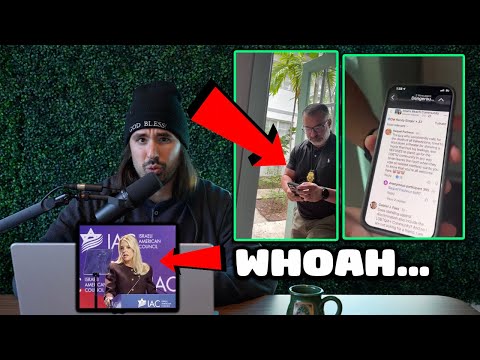
Miami Beach Police Show Up At Woman’s Door After Facebook Post Criticizing Mayor, Raising Alarming Free-Speech Questions
Police knocking on a private citizen’s door over a Facebook post should sound like something out of a European hate-speech prosecution, not an American beach city. Yet that is exactly what happened in Miami Beach, where officers appeared at a woman’s home after she posted sharp criticism of the city’s mayor. The incident, captured and circulated widely, triggered immediate backlash from civil-liberties advocates who warn this could be a preview of a more aggressive political policing future if current trends continue.
The woman’s post accused the mayor of championing anti-Palestinian rhetoric, retaliating against a local theater that screened a film critical of Israel’s actions, and refusing to support LGBTQ residents. Whether readers agree with her criticisms is irrelevant. The core concern is that a government official appears to have responded to political speech not with debate or public clarification, but with a police visit. That alone is enough to raise constitutional alarms.
A Facebook Post Becomes a Police Matter
The post in question challenges the mayor’s public positions and frames them as discriminatory. Shortly afterward, Miami Beach police arrived at the woman’s residence. According to the commentary surrounding the incident, the visit was not tied to a threat, not tied to incitement, and not tied to harassment — but to political criticism. That distinction is crucial. Even in cases where online speech is heated, American law places a high bar on government intervention. Critics argue that this incident does the opposite: the visit appears to target a viewpoint rather than a threat.
The narrator points out that the mayor’s response seems to mirror the increasing push for “hate speech” enforcement frameworks in Western countries where citizens have been questioned or penalized for nothing more than political commentary. The fear is that these norms are being imported into the United States under the justification of combating antisemitism. The video argues that the tactic is being wrapped in civil-rights language but executed as political suppression.
Florida’s Political Climate Makes This Bigger Than Miami Beach
The incident is placed within the broader debate around Florida’s speech laws. In 2019, Gov. Ron DeSantis flew to Israel to sign a state-level antisemitism bill. Critics of that decision describe it as unconstitutional, symbolic submission to donors, and a gateway to broader restrictions on political expression. They warn the Miami Beach case shows exactly how such laws can be weaponized: local officials interpreting criticism of Israel or pro-Israel politicians as “hate,” then leaning on police to enforce their interpretation.
The commentators cite political donors — such as the Adelson family — who exert heavy influence on federal and state policy regarding Israel. They argue that this influence makes Florida fertile ground for punishments disguised as “anti-hate enforcement” but functionally aimed at silencing dissent on foreign-policy issues. The woman whose door the police knocked on becomes an illustrative example of how political and donor ecosystems can merge into enforcement pressure.
The Larger Pattern: Political Speech Treated as Criminal Suspicion
Throughout the video, the narrator references multiple cases where criticizing Israel, Israeli policies, or U.S. politicians aligned with those policies has resulted in accusations of antisemitism, doxxing, blacklisting, or de-platforming. The Miami Beach incident is framed as a continuation of that pattern — but now with law enforcement physically appearing at citizens’ homes. The worry is simple: if this is normalized, dissent collapses.
The video connects the dots: powerful donors exert pressure, political leaders comply, laws get rewritten, and then police enforce the new expectations. Whether one agrees with that interpretation or not, the footage raises legitimate concerns about selective enforcement and political policing. At minimum, civil-liberties groups argue that police involvement in speech disputes creates a chilling effect far beyond the individual case.
A Warning About Where the Trend Leads
The commentary ends with a blunt warning. America, it argues, risks drifting toward a system where “offending the wrong political faction” is treated as a policing matter, mirroring laws in Europe, Australia, and Canada. The concern is not theoretical — the Miami Beach incident is presented as tangible evidence that these norms are already creeping into the United States.
The message is stark: when political criticism triggers a police visit, democracy is already compromised. Nations do not collapse into censorship overnight. They slide. And one knock at a door is exactly the kind of moment historians later point to and say: this is when the rules began to change.


